Resources
Design Categories:


- Circulation & Paving
- Community Gardens
- Excavation
- Exterior Security
- General Grounds
- On-site Clean Power Generation & Battery Storage
- Parking Lots
- Pedestrian Circulation & Paving
- Planting
- Playgrounds
- Site Amenities
- Site Fences
- Site Lighting
- Site Utilities
- Stairs, Ramps & Railings
- Stormwater Piping & Drainage Structures


- Building Drainage
- Building Sewage System
- Domestic Hot Water (DHW) System
- Domestic Water System
- Geothermal & Ground Source Heat Pumps
- Natural Gas Piping
- Non-Residential Spaces Plumbing Fixtures
- Plumbing General
- Roof Tanks
- Underground Chilled Water Piping
- Underground Hydronic Piping
- Underground Natural Gas Piping
- Underground Water Piping


Stairs, Ramps & Railings
Description
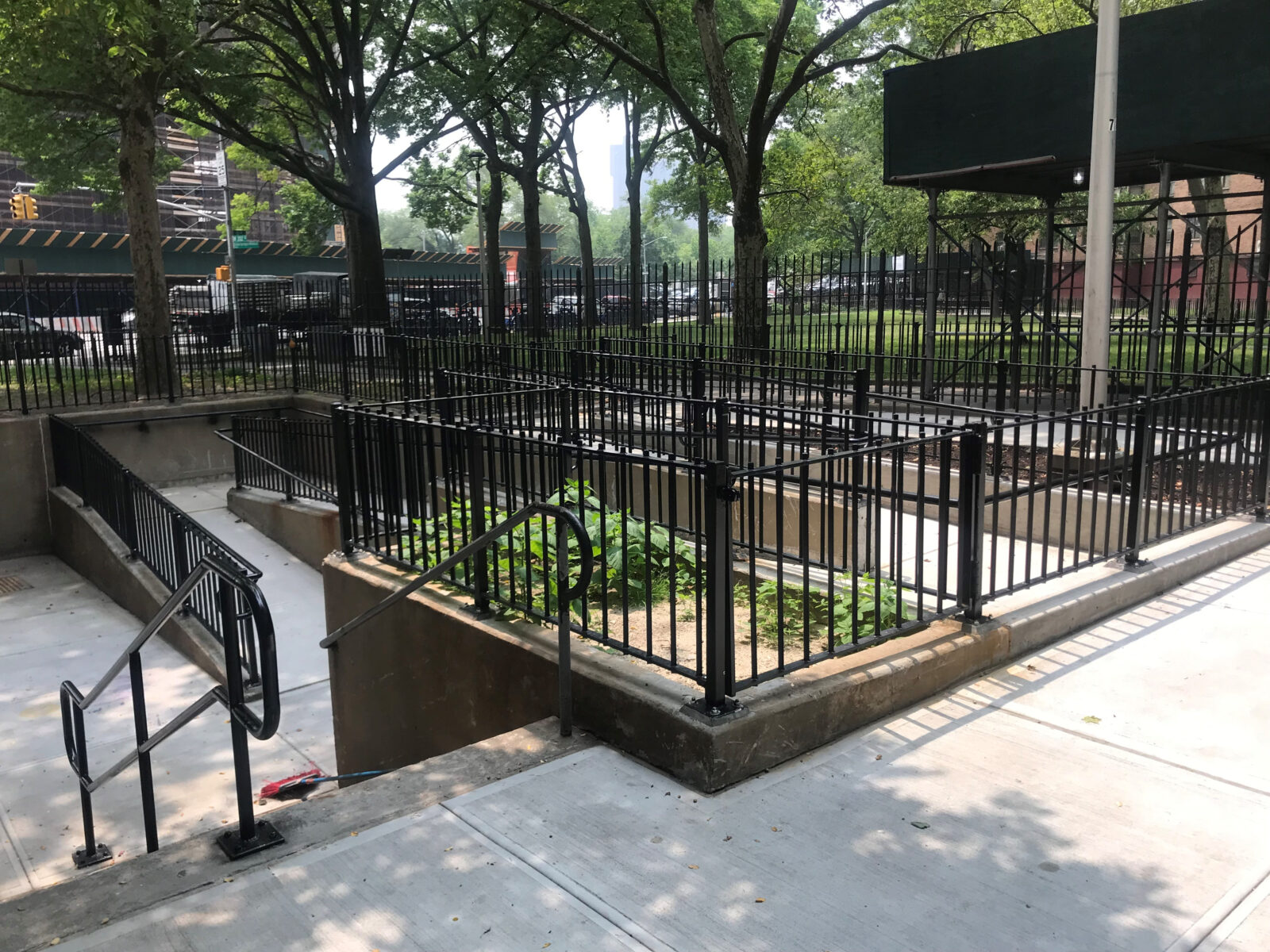
- Stairs and Ramps are used for circulation in and around buildings. Stairs provide access to the front of buildings and are located within the building to provide a safe means of vertical circulation and travel in the event of a fire. Following guidance from NYC DCP Active Design Guidelines stairs are encouraged for active mobility of residents and to reduce reliance on elevators which prolongs the useful service life of elevators. Ramps are utilized for access to lobbies and basements. Ramps provide accessible access and must conform to required slopes as specified by ADA Requirements.
Baseline
- All stairs, stair landings, and corridors must be in accordance with the NYC Building Code to provide an accessible means of travel for the mobility impaired.
- All ramps must have a running slope no steeper than 1:12.
- Where possible ramps shall conform with the least possible running slope and, where possible, be located next to new or existing stairs. Maintain minimum distances between stairs and ramps to provide older residents and mobility impaired residents the quickest and most direct path of travel.
- The minimum clear distance between handrails must be 36 inches (915 mm) or as otherwise stated in the NYC BC.
- All ramps are required to have a landing at the top and the bottom of each ramp run.
- The minimum landing clear length shall be 60 inches long.
- Ramps that change direction between runs at landings are required to have a clear landing of 60 inches by 60 inches square as a minimum.
- Ramp runs with a vertical rise greater than 6 inches are required to have handrails.
- When installing drop curb ramps, counter slopes of adjoining sidewalks, gutters, and road surfaces immediately adjacent to the drop curb shall not be steeper than 1:20. The adjacent surfaces at transitions of drop curbs to walks, gutters, and streets shall be at the same level.
RAD Conversion
- All RAD Conversions must comply with the accessibility requirements of all applicable laws including, without limitation, to the New York City Building Code, the Fair Housing Act, the Americans with Disabilities Act, Section 504 of the Rehabilitation Act of 1973 (“Section 504”), and the 2021 FHEO Assurances Agreement.
Relevant Codes & Regulations
Strategies

Promote Safety and Security of Residents & Staff

Implement Active Design Approaches

Ensure Accessibility & Inclusion
Last Updated on January 10, 2026 at 7:43 am
Downloads and Data
Details
L-DT_2Hand Sloped SBF Ramp


L-DT_504-Guardrail
L-DT_Conc Patch Stair Wall
L-DT_Concrete Patching Stair & Platform and Wall
L-DT_Construction Joint at Ramp
L-DT_Drawing6
L-DT_Hand Center Wall
L-DT_Hand Conn Pipe
L-DT_Hand Conn SBF
L-DT_Hand Level Mesh Fence Stairs
L-DT_Hand Level Pipe
L-DT_Hand Level SBF Stairs
L-DT_Hand Level SBF
L-DT_Hand Sloped 6SBF Ramp
L-DT_Hand Sloped 6SBF Steps
L-DT_Hand Sloped Mesh Fence Ramp
L-DT_Hand Sloped Mesh Fence Steps
L-DT_Hand Sloped Pipe
L-DT_Hand Sloped SBF Ramp
L-DT_Hand Sloped SBF Steps
L-DT_Hand Wall Brkt-New
L-DT_Hand Wall Brkt
L-DT_Pipe Conn Pipe
L-DT_Pipe New Pipe in Existing Sleeve in Foundation Wall
L-DT_Pipe Sleeve Ex Wall
L-DT_Pipe Sleeve
L-DT_Piperail Multi Rail
L-DT_Piperail Sloped
L-DT_Piperail Steps Cheekwall
L-DT_Piperail Steps Ftgs
L-DT_Piperail Wide Steps
L-DT_Ramp at Bldg Door with Handrail
L-DT_Ramp at Bldg Door
L-DT_Ramp at Bldg Wall
L-DT_Ramp Center Cheekwall
L-DT_Ramp Cheekwalls
L-DT_Ramp Corner Cheekwall
L-DT_Ramp Ex Jt
L-DT_Ramp Exp Joint
L-DT_Ramp Prof
L-DT_Ramp Profile Plus
L-DT_Steel Guardrail
L-DT_Step at Entrance
L-DT_Steps w Wall-Rail or Fence in Steps
L-DT_Steps w Wall-Rail or Fence in Walls
L-DT_Wall Brick Veneer
L-DT_Wall Spread Footing